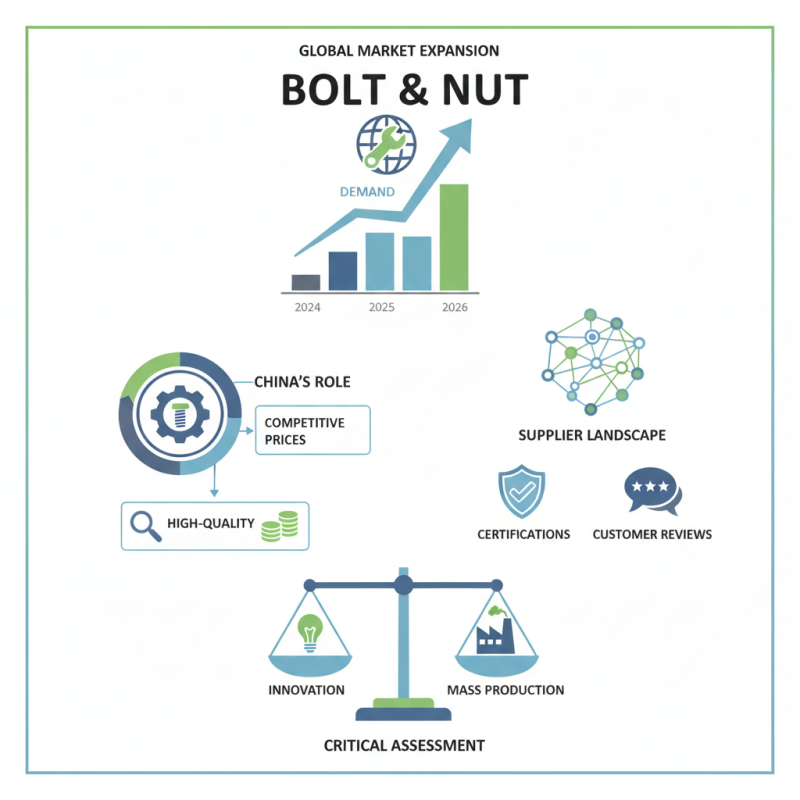
The global market for "Bolt En Nut" products is expanding rapidly. As we approach 2026, buyers are increasingly seeking reliable suppliers, especially from China. This growth reflects the rising demand for construction and manufacturing materials worldwide.
Chinese manufacturers have gained a reputation for producing high-quality bolts and nuts at competitive prices. However, the sheer number of suppliers can be overwhelming. Identifying trustworthy companies requires careful research and consideration. Buyers need to assess factors like quality certifications and customer reviews.
In this context, it is important to analyze key players in the industry. Some companies excel in innovation, while others focus on mass production. This diversity can lead to confusion, and not all suppliers meet the same standards. As buyers navigate this intricate landscape, a critical eye towards supplier capabilities is necessary for long-term success.
Overview of China's Bolt and Nut Industry in 2026
China's bolt and nut industry is expected to see significant growth in 2026. The demand for fasteners will continue to rise, driven by sectors like construction and manufacturing. Companies are investing in advanced production technologies to enhance efficiency. However, challenges persist, including fluctuating raw material prices and environmental regulations.
Innovations are emerging within the industry. Sustainable practices are becoming crucial, as buyers push for eco-friendly products. Despite advancements, not all manufacturers meet these standards. Quality control remains an area needing improvement. Thorough inspections are essential to ensure product reliability.
Global buyers will seek reliable suppliers, but the market is fragmented. Many businesses still struggle with outdated practices. Those that embrace modernization and sustainability may thrive. Partnerships and collaborations could also play a vital role in overcoming hurdles. The landscape may shift rapidly, making adaptability key for success.
Key Manufacturers and Suppliers of Bolts and Nuts in China
China's manufacturing landscape for bolts and nuts is poised for significant growth in 2026. The demand for these essential components is projected to rise, driven by advancements in construction and automotive sectors. According to a recent market analysis, the global bolts and nuts market is expected to reach $90 billion by 2027, with China contributing a substantial portion. This reflects the country's strong export capacity and emphasis on quality manufacturing.
Several key manufacturers in China have gained recognition for their commitment to quality and innovation. These companies invest heavily in technology, enhancing production efficiency and product reliability. Notably, they often adhere to international standards, ensuring that their products meet global expectations.
Reports indicate that China's bolt and nut manufacturing industry comprises over 3,000 enterprises, with a combined output that accounts for approximately 40% of the world’s total production.
However, challenges remain. Quality inconsistency can arise from rapid production scaling. Not all manufacturers maintain stringent quality control processes. This inconsistency could affect buyers seeking reliability. As the sector evolves, focusing on both innovation and quality assurance will be crucial for suppliers aiming to maintain a competitive edge in the global market.
Global Market Trends Impacting Chinese Bolt and Nut Exports
In 2026, the landscape for Chinese bolt and nut exports is evolving. Global market trends significantly influence this sector. Factors such as changing consumer preferences and advances in technology shape demand. Buyers now seek not just quality, but also sustainable practices.
The surge in the renewable energy sector highlights this shift. Electric vehicles and wind turbines require specialized fasteners. Consequently, Chinese suppliers must adapt. Investing in research and development is crucial. Some manufacturers may struggle to keep up with these changes. This could lead to a market gap.
Trade policies also play a vital role. Tariffs and regulations can impact pricing and availability. Suppliers need to navigate these complexities carefully. A lack of compliance could deter potential buyers. As global buyers look for reliable partners, Chinese manufacturers must emphasize transparency and quality. The balance between innovation and adherence to regulations will define future success.
Quality Standards and Certifications for Bolts and Nuts in China
When sourcing bolts and nuts from China, understanding quality standards is crucial. The country's manufacturing sector adheres to various certifications, ensuring products meet international requirements. Key standards like ISO 9001 are prevalent. They illustrate a commitment to quality management systems. Other standards include CE certification and ASTM specifications that dictate safety and performance.
Quality control processes are essential in manufacturing. Suppliers often conduct rigorous testing on bolts and nuts to verify durability. This includes tensile strength tests and corrosion resistance evaluations. Buyers should inquire about these tests to ensure reliability.
Tips: Always request certifications from suppliers. Checking their compliance with quality standards can save you from future headaches. It's also beneficial to ask for samples first. This helps assess the quality before committing to large orders. When sourcing, remember that price alone doesn't reflect quality. Balancing cost with reliability is vital for ensuring you receive the best products.
Quality Standards and Certifications for Bolts and Nuts in China (2026)
Challenges and Opportunities for Chinese Bolt and Nut Suppliers in 2026
The bolt and nut industry in China faces a complex landscape in 2026. Global demand continues to rise, but suppliers must adapt to shifting market dynamics. Pressure for sustainable practices is increasing. Meeting these standards can be a challenge for many manufacturers. This push towards sustainability might require significant changes in production processes.
Competition is fierce, with manufacturers from various regions vying for market share. Quality and innovation are essential for staying relevant. Chinese suppliers must ensure their products meet international standards. This challenge presents an opportunity for growth as suppliers can invest in research and development. Customization could become a critical factor. Adapting to specific client needs can strengthen relationships and build loyalty.
Supply chain disruptions can hinder progress. Rising costs of raw materials pose additional challenges. Suppliers must be agile and strategic in their operations. Exploring new markets might mitigate some risks. While the future looks promising, Chinese bolt and nut suppliers will need to navigate these challenges with care.
Continuous improvement and responsiveness will be crucial in this evolving landscape.
FAQS
: The demand is rising due to construction and manufacturing sectors. Companies are investing in advanced technologies.
Yes, fluctuating raw material prices and environmental regulations pose challenges. Quality control is also an area needing improvement.
Buyers must request certifications and inquire about quality tests. This includes checking tensile strength and corrosion resistance.
Customers demand eco-friendly products, pushing manufacturers toward sustainable practices. Not all manufacturers meet these expectations.
Embracing modernization and focusing on quality assurance is crucial. Partnerships may also help overcome industry challenges.
The market is fragmented, with over 3,000 enterprises. Quality inconsistency remains an issue due to rapid scaling.
Price alone doesn't determine quality. Balancing cost with reliability is essential to avoid future issues.
The global market is expected to reach $90 billion, with China contributing significantly due to strong export capacity.
No, not all maintain stringent quality control processes. This inconsistency can affect buyers' trust in product reliability.
Rigorous testing includes tensile strength and corrosion resistance evaluations. Buyers should demand to see testing results.
Conclusion
In 2026, China's bolt en nut industry is poised for significant growth, driven by increasing global demand and evolving market trends. A comprehensive overview reveals key manufacturers and suppliers who are positioned to meet the needs of international buyers. As global markets shift, Chinese exports of bolts and nuts will be influenced by innovations in production and an emphasis on quality standards and certifications, ensuring that products meet international expectations.
However, the industry faces challenges such as rising competition and supply chain disruptions. Yet, these challenges present opportunities for Chinese bolt en nut suppliers to enhance their production capabilities and expand their market reach. By focusing on quality and adapting to global trends, Chinese manufacturers can solidify their standing in the global market, making them essential partners for buyers worldwide.

 Dongshuo Fastener