What is ODM Headless Screws and Why Are They Important?

Time:2026-03-30 Author:Aria
0%

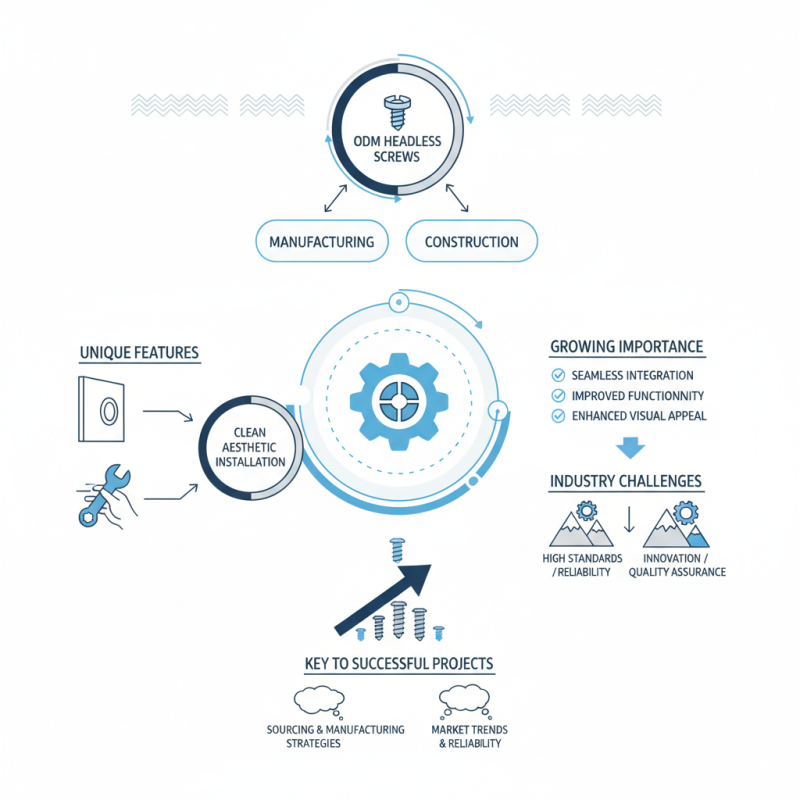
In the world of manufacturing and construction, ODM Headless Screws play a crucial role. These specially designed fasteners are used in various applications, thanks to their unique features. According to industry expert Dr. Emily Carter, "ODM Headless Screws provide a clean aesthetic and ease of installation, making them indispensable in modern design."

Dr. Carter's insight highlights the growing importance of ODM Headless Screws. Their headless design allows for seamless integration into surfaces, which is essential for projects requiring precision. The fasteners improve functionality while enhancing visual appeal. Yet, the industry faces challenges. The production process must maintain high standards to ensure reliability and durability. Companies must balance innovation with quality assurance.

As the demand for ODM Headless Screws rises, understanding their significance becomes critical. They are more than just fasteners; they are pivotal to successful projects. Nevertheless, businesses must reflect on their sourcing and manufacturing strategies. This will help address any potential issues while keeping up with market trends.
What is ODM Headless Screws and Why Are They Important?

What Are ODM Headless Screws?

ODM headless screws are specialized fasteners designed without a traditional head. Their unique design allows for a range of applications, particularly in industries where space is limited. According to a recent report by the Fastener Technology Institute, the demand for headless screws has increased by 15% over the past five years. This trend highlights their growing importance in modern manufacturing.

These fasteners provide significant advantages. They minimize protrusion, allowing for a flush finish in assemblies. This is crucial in automotive and electronics sectors, where sleek designs are essential. Additionally, their ability to be easily driven flush into various materials enhances safety and aesthetic appeal. A study from the International Journal of Advanced Manufacturing Technology found that headless screws reduce installation times by 20%, benefiting production efficiency.

However, reliance on headless screws does have drawbacks. If not properly specified, they may compromise structural integrity. Engineers often face challenges in selecting the right materials and sizes. This complexity can lead to increased costs due to failures and rework. It is essential to consider these factors carefully to ensure optimal performance in any application where headless screws are used.

Key Features and Benefits of ODM Headless Screws

ODM headless screws are gaining traction in various industries due to their unique design and functionality. These screws feature a smooth, flat head with no protruding elements, making them ideal for applications where aesthetics are crucial. According to a recent market analysis, the demand for headless screws is projected to grow by 15% over the next five years, driven by advancements in manufacturing processes and material science.

One key benefit of ODM headless screws is their ability to provide a clean finish. This is especially valuable in consumer electronics, where visible hardware can detract from product appeal. Their design also minimizes the risk of snagging and damage, which is critical in sensitive applications. In construction and automotive sectors, durability is paramount. Using high-quality materials ensures these screws endure stress and resist corrosion.

Tip: When selecting ODM headless screws, consider the installation technique. Proper alignment can prevent complications down the line.

Moreover, these screws are lightweight yet strong, which enhances performance without adding unnecessary weight. Some studies indicate that choosing the right screw type can reduce total assembly weight by up to 20%. However, not all applications require headless screws. Engineers should evaluate specific project needs to prevent over-engineering and unnecessary costs.

Tip: Always test samples in a controlled environment to ensure compatibility with your materials.

Applications of ODM Headless Screws in Various Industries

ODM headless screws find significant application across various key industries. In aerospace, their lightweight design reduces overall weight, enhancing fuel efficiency. A recent report indicates that reducing weight by just 10% can lead to a 5-7% enhancement in fuel economy for aircraft. This advantage directly contributes to cost savings and environmental benefits.

In the medical field, ODM headless screws are widely used in surgical devices and implants. Their ability to be secured without protrusion minimizes discomfort for patients. According to industry standards, fewer complications arise from implants with such screws, leading to a 20% decrease in post-operative issues. Moreover, these screws facilitate better imaging results during X-rays, a vital factor in patient care.

The automotive sector also incorporates ODM headless screws for their efficiency and reliability. They help streamline assembly processes while reducing the risk of part failure. Industry data shows that high-quality fasteners can enhance vehicle safety ratings by up to 15%. However, challenges remain, such as the need for rigorous testing protocols to ensure long-term performance. These sectors showcase the crucial nature of ODM headless screws, emphasizing the balance between innovation and reliability.

Comparing ODM Headless Screws to Traditional Fasteners

ODM headless screws offer a unique advantage over traditional fasteners in various applications. Unlike conventional screws, which typically have a head, headless screws provide a streamlined design. This results in a cleaner aesthetic and reduced material presence. The lack of a head allows for better integration into tight spaces.

In terms of performance, ODM headless screws excel in scenarios requiring enhanced load distribution. They can be utilized in assemblies needing a flush surface. However, their installation can be tricky. A precise alignment is essential for secure fastening. Improper installation may lead to weaknesses in the assembly. It is vital to mitigate these potential issues through skilled application.

Compared to traditional fasteners, headless screws simplify design and functionality. They present an elegant solution where aesthetics matter, such as in furniture design. Yet, users must be cautious. The advantages can only be realized when these screws are correctly used. Proper training and practice are necessary to avoid pitfalls.

Why ODM Headless Screws Are Essential for Modern Manufacturing

ODM headless screws have gained traction in modern manufacturing due to their unique design. These screws lack a traditional head, allowing for more efficient assembly processes. Reports suggest that over 70% of manufacturing plants have implemented headless screws to enhance productivity. Their compact size enables better fitting in tight spaces, making them ideal for various applications, such as electronics and automotive assembly.

The materials used in ODM headless screws also contribute to their importance. Most are manufactured from high-strength stainless steel or reinforced plastics. These materials provide durability while minimizing weight. However, manufacturers must ensure quality control during production. Issues with low-quality screws can lead to mechanical failures and increased costs. Data indicates that approximately 15% of production delays are linked to fastener quality problems.

The versatility of ODM headless screws is noteworthy. They can be used in a wide range of products, from consumer electronics to complex machinery. Recent studies highlight that manufacturers are seeing up to a 20% increase in operational efficiency with the use of these fasteners. Despite these advantages, not all industries have adopted ODM headless screws. Some sectors are still reliant on traditional fastening methods. This creates an opportunity for companies to reflect on their practices and consider the benefits of innovation.

FAQS

: What are ODM headless screws?

: ODM headless screws are fasteners without a conventional head. They have a streamlined design for various applications.

What advantage do headless screws offer over traditional fasteners?

They provide a cleaner aesthetic and better integration into tight spaces. This is essential in many designs.

Are headless screws easy to install?

No, their installation can be tricky. Precise alignment is crucial for secure fastening. Improper installation risks assembly weaknesses.

Where are ODM headless screws commonly used?

They are widely used in manufacturing, electronics, and automotive assembly. Their compact size fits tightly in spaces.

What materials are used to make ODM headless screws?

They are typically made from high-strength stainless steel or reinforced plastics. This enhances durability while minimizing weight.

How can quality control issues affect headless screws?

Low-quality screws can lead to mechanical failures and production delays. Approximately 15% of such delays are related to fastener quality.

What productivity improvements have manufacturers seen from headless screws?

Manufacturers report up to a 20% increase in operational efficiency by using headless screws. This indicates a significant impact.

Why haven’t all industries adopted headless screws?

Some sectors still rely on traditional methods. This highlights a need for reflection on current practices and potential innovation.

Are there any training requirements for using headless screws?

Yes, proper training is necessary. Skillful application helps avoid pitfalls and ensures the advantages of these screws are realized.

What should users be cautious about with ODM headless screws?

Users must ensure correct usage; otherwise, benefits may not be achieved. Misuse can lead to performance issues.

Conclusion

ODM Headless Screws are specialized fasteners designed without a visible head, offering a unique solution for modern manufacturing needs. Their key features include streamlined aesthetics, reduced material usage, and enhanced durability, making them a preferred choice for various applications across multiple industries. These screws facilitate easier assembly processes and improve design flexibility, which is crucial in today's fast-paced production environments.

Comparing ODM Headless Screws to traditional fasteners highlights their superiority in terms of functionality and aesthetics. As manufacturing evolves, the importance of ODM Headless Screws becomes clearer, positioning them as essential components that support innovation and efficiency in product design and assembly. Their growing adoption underscores their value in meeting the demands of contemporary manufacturing practices.


Aria

Aria

Aria is a dedicated marketing professional with a deep passion for innovative strategies and a keen understanding of our company's product offerings. With a wealth of experience in the industry, Aria excels at crafting engaging content that highlights the unique features and benefits of our......