 Dongshuo Fastener
1 / 5
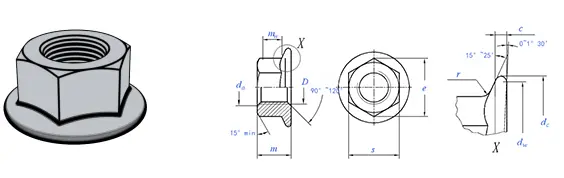
| Thread specifications (D) | M5 | M6 | M8 | M10 | M12 | M14 | M16 | M20 | ||
| P (Pitch) | Coarse teeth | 0.8 | 1 | 1.25 | 1.5 | 1.75 | 2 | 2 | 2.5 | |
| Fine Teeth 1 | / | / | 1 | 1.25 | 1.5 | 1.5 | 1.5 | 1.5 | ||
| Fine Teeth 2 | / | / | / | -1 | -1.25 | / | / | / | ||
| c | Min | 1 | 1.1 | 1.2 | 1.5 | 1.8 | 2.1 | 2.4 | 3 | |
| Min | Min | 5 | 6 | 8 | 10 | 12 | 14 | 16 | 20 | |
| Max | 5.75 | 6.75 | 8.75 | 10.8 | 13 | 15.1 | 17.3 | 21.6 | ||
| dc | Max | 11.8 | 14.2 | 17.9 | 21.8 | 26 | 29.9 | 34.5 | 42.8 | |
| dw | Min | 9.8 | 12.2 | 15.8 | 19.6 | 23.8 | 27.6 | 31.9 | 39.9 | |
| e | Min | 8.79 | 11.05 | 14.38 | 16.64 | 20.03 | 23.36 | 26.75 | 32.95 | |
| m | Max | 5 | 6 | 8 | 10 | 12 | 14 | 16 | 20 | |
| Min | 4.7 | 5.7 | 7.6 | 9.6 | 11.6 | 13.3 | 15.3 | 18.9 | ||
| mw | Min | 2.2 | 3.1 | 4.5 | 5.5 | 6.7 | 7.8 | 9 | 11.1 | |
| s | Maximum = nominal | 8 | 10 | 13 | 15 | 18 | 21 | 24 | 30 | |
| Min | 7.78 | 9.78 | 12.73 | 14.73 | 17.73 | 20.67 | 23.67 | 29.67 | ||
| r | Max | 0.3 | 0.36 | 0.48 | 0.6 | 0.72 | 0.88 | 0.96 | 1.2 | |
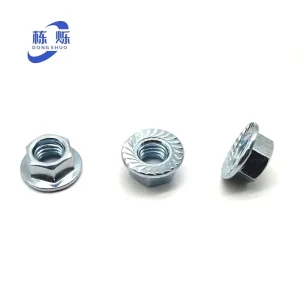
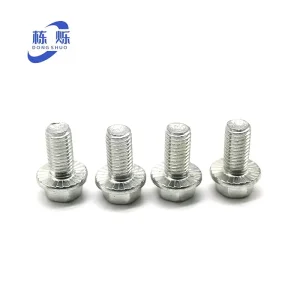
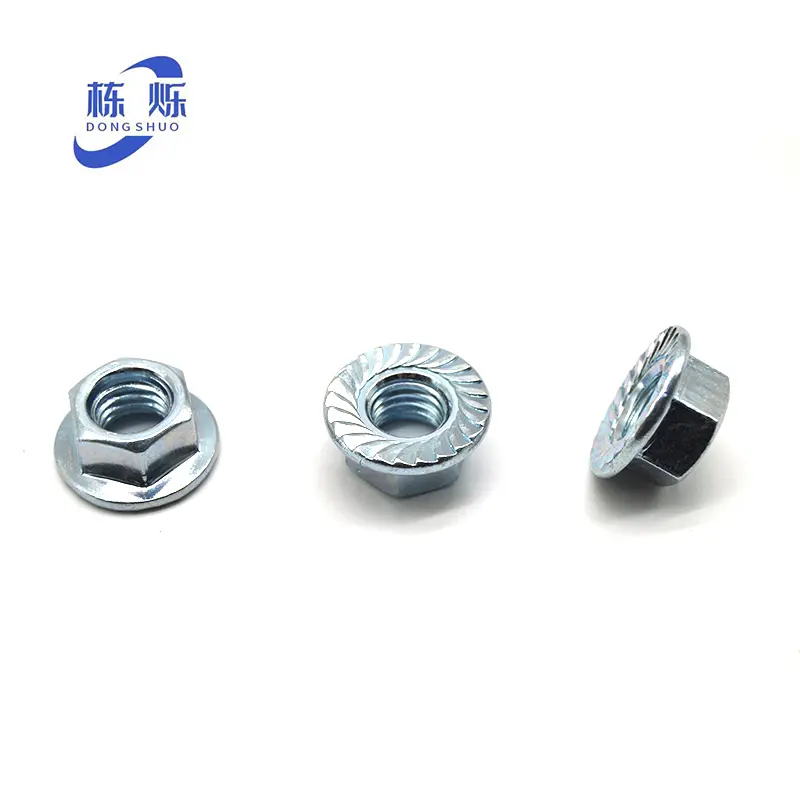
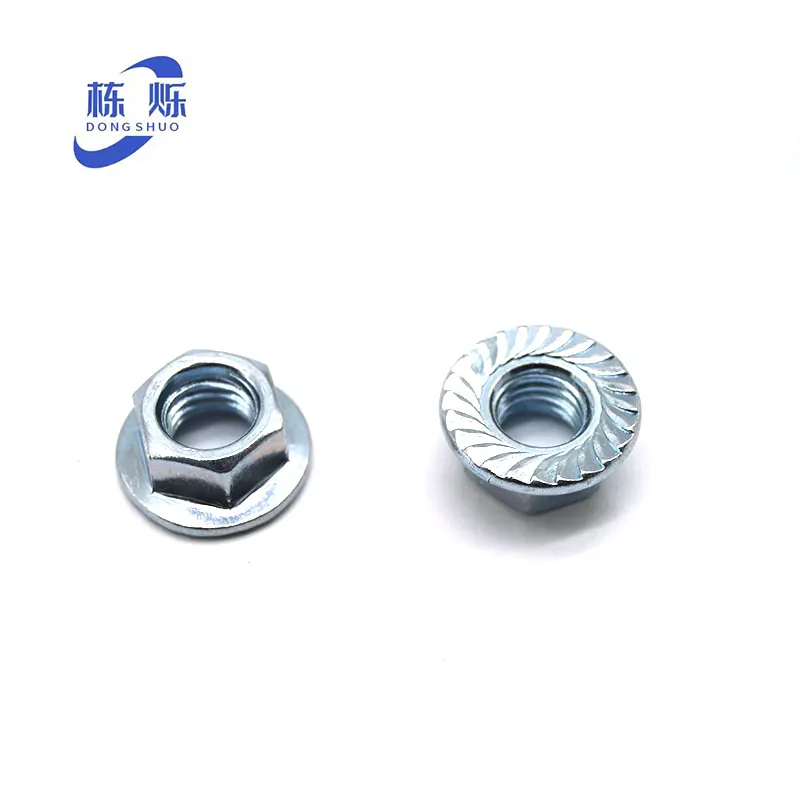
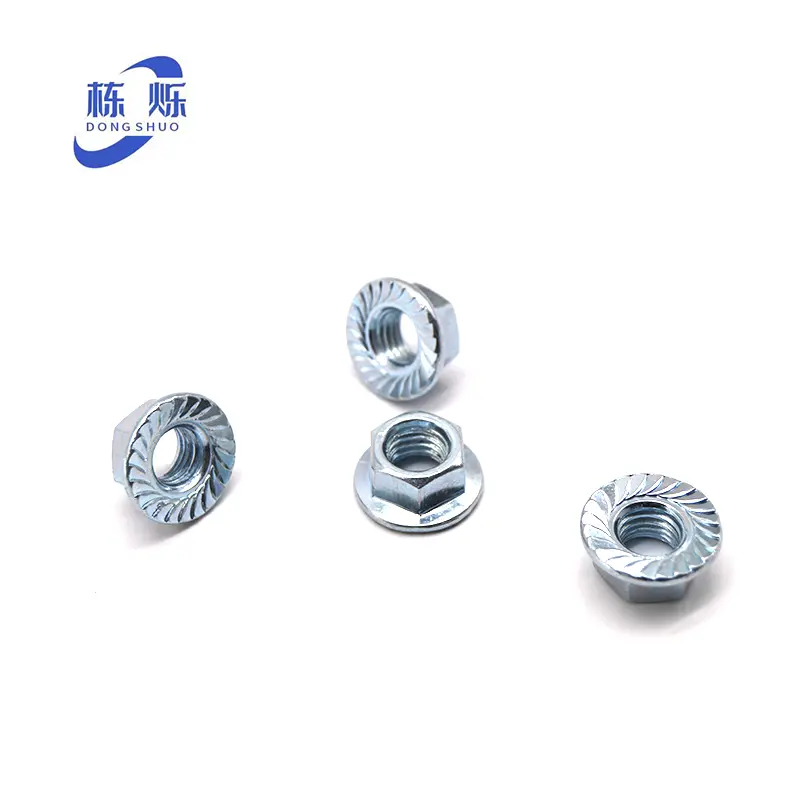
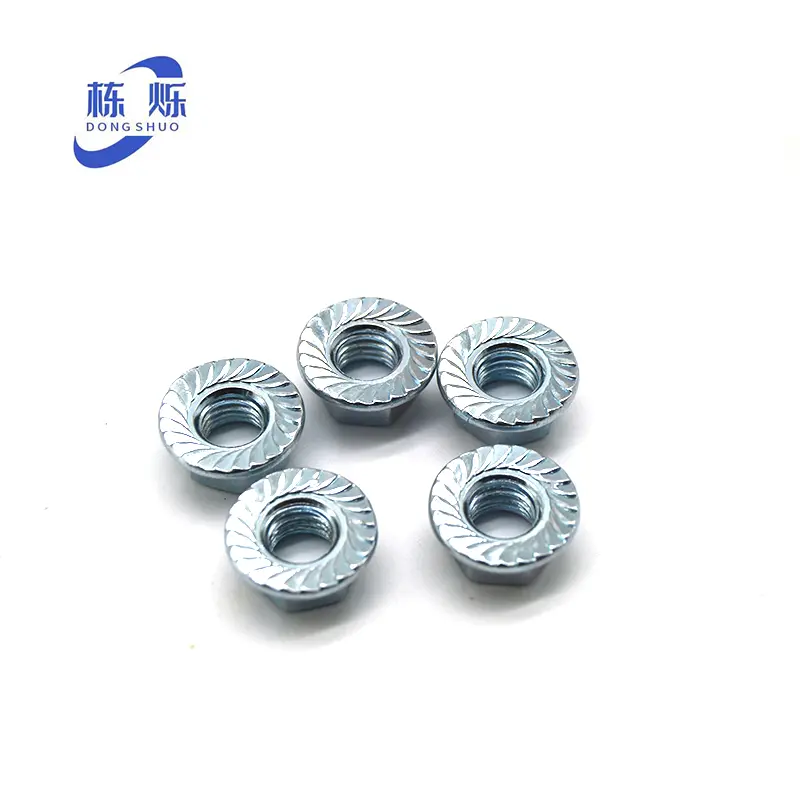
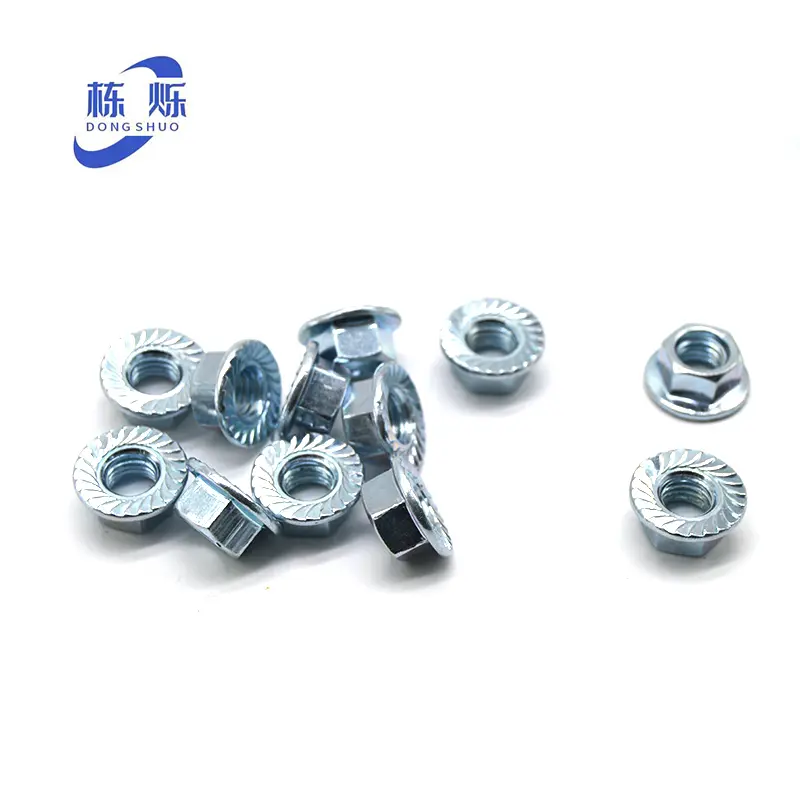
The integrated flange design increases the contact area with the workpiece, providing superior support and protecting connecting components with greater tensile strength than standard nut/washer combinations.
Serrated protrusions under the flange distribute pressure evenly and create a locking effect to prevent loosening, while simultaneously improving connection sealing against gas or liquid leakage.
High-quality flange nuts reduce vibrations and noise generated during equipment operation, significantly improving mechanical stability and operational efficiency.