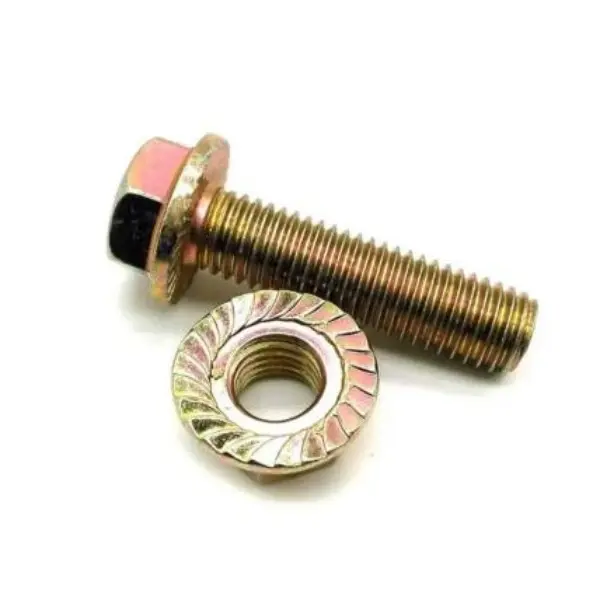
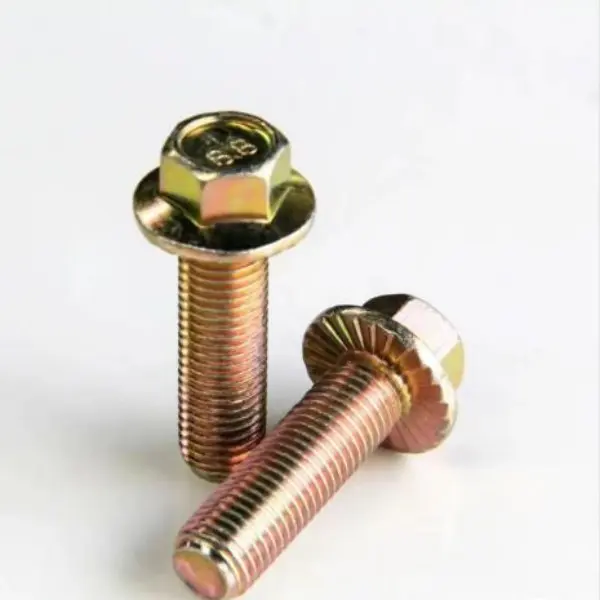
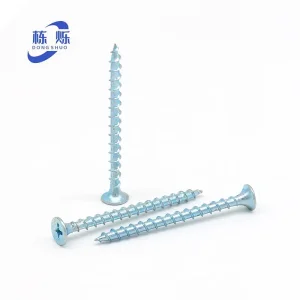
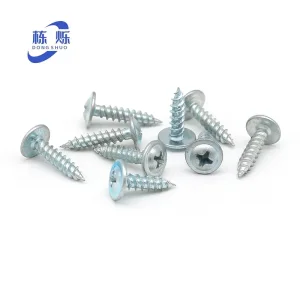
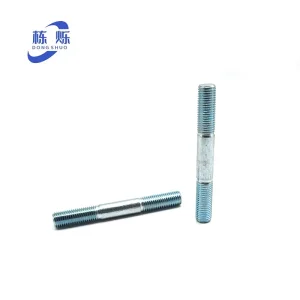
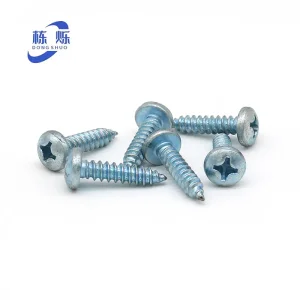
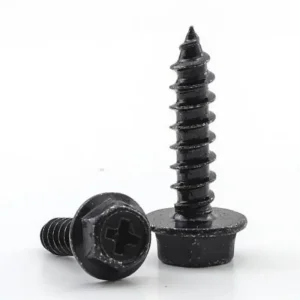
Flange bolt, also known as flange bolt, is a special type of bolt with a flange surface (flange), widely used in situations that require high preload, anti loosening, and sealing.
● Flange Surface Design
An integral flange (circular gasket) below the bolt head increases the contact area, disperses pressure, and reduces damage to the connection surface.
● Hexagonal / Twelve Pointed Head
Commonly designed as a hexagonal head for standard tools; high-strength models may use twelve corner heads for better torque.
● Anti-slip Tooth Pattern
Some flange surfaces feature radial tooth patterns to enhance friction and prevent loosening under vibration.
Automotive Industry
Key parts such as engines, gearboxes, and wheel hubs adapted to high vibration.
Machinery Manufacturing
Heavy equipment, machine tools, pumps, and valves requiring high preload force.
Architecture & Steel Structures
Wind and earthquake resistant structures like bridges, steel frames, and curtain walls.
Rail Transit
Rail vehicles and signal equipment where safety and reliability are paramount.
Frequently Asked Questions (FAQ)
1. What makes a flange bolt different from a standard bolt?
A flange bolt features an integrated circular washer (flange) under the head, which eliminates the need for a separate washer and provides a larger surface area for load distribution.
2. Can flange bolts prevent loosening due to vibration?
Yes, many flange bolts are designed with serrated or radial tooth patterns on the flange surface to increase friction and lock the bolt in place during high-vibration scenarios.
3. What are the common strength grades for flange bolts?
Flange bolts are typically available in various carbon steel grades such as 4.8, 8.8, and 10.9, as well as stainless steel options like A2-304 and A4-316.
4. Are flange bolts suitable for outdoor use?
Yes, when treated with Hot Dip Galvanizing or Dacromet, or when made from stainless steel, flange bolts offer excellent resistance to corrosion in outdoor and heavy-duty environments.
5. Where are flange bolts most commonly applied?
They are widely used in the automotive industry (engines, hubs), heavy machinery, bridge construction, and rail transit systems due to their reliability and uniform force distribution.
6. Does using a flange bolt improve sealing?
Yes, the large contact area of the flange surface provides a better seal, especially when used in conjunction with soft gaskets or on mating flange surfaces.
 Dongshuo Fastener